
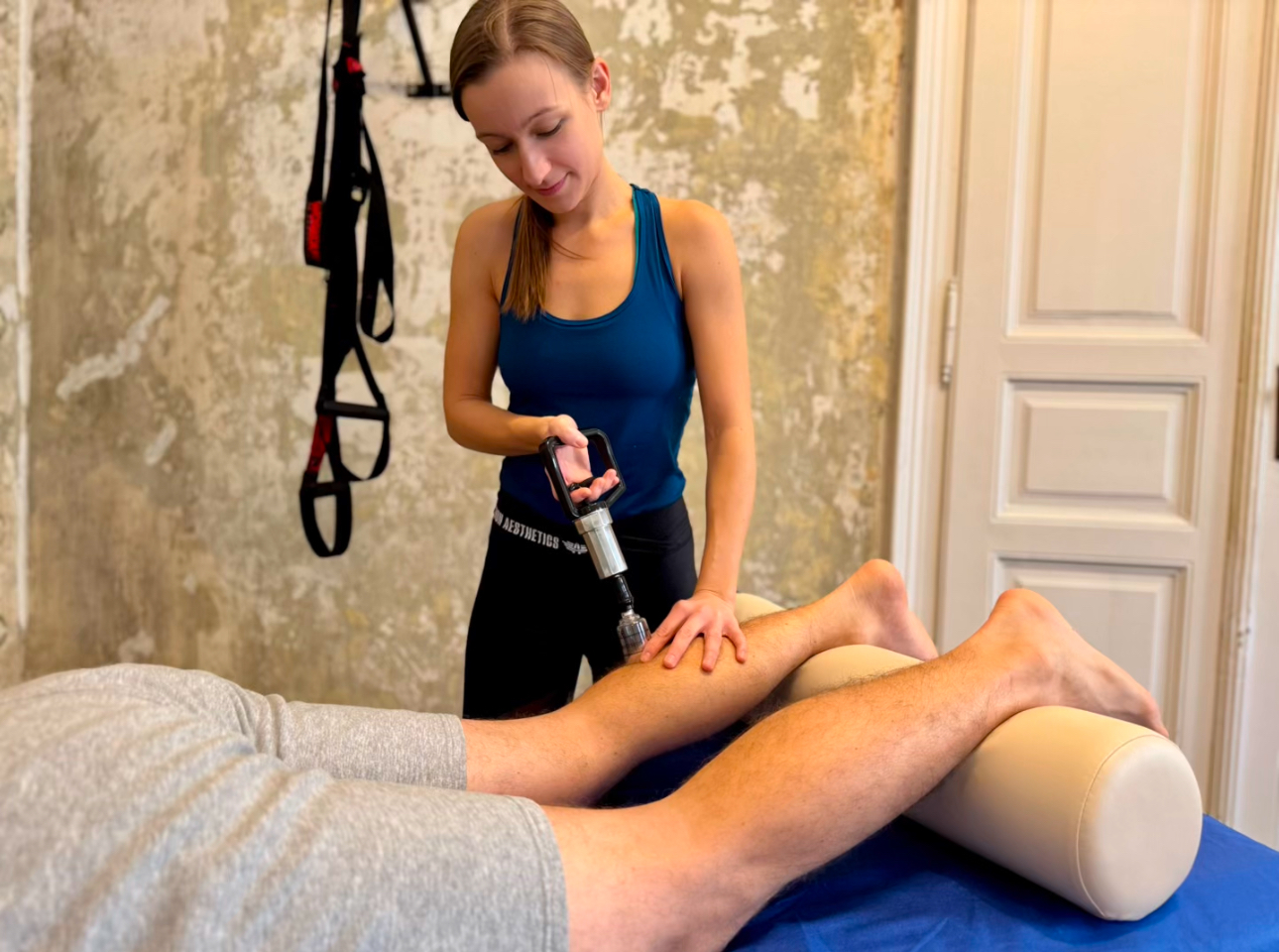
What is cupping?
Cupping is a treatment method that has been used for a very long time, where a bell-shaped cup (which can be made of plastic, silicone, or glass) is placed on the area to be treated, creating a vacuum by pulling the tissue layers under the skin apart, thereby enhancing local blood and lymphatic circulation.
It can be an excellent addition to physical therapy, manual therapy, massage, and Fascial Distortion Model techniques.
What are the types of cupping therapy?
Static or fixed cupping: The cups are left on the patient under vacuum for 10-15 minutes. Although it leaves noticeable marks (red, purplish, even blackish swollen spots), it is barely painful.
Dynamic or movement-based fixed cupping: After the cups are placed, the patient must perform certain movements to enhance the effect. Here, greater pain may occur, but it is important to push to the limit of tolerance to achieve the desired beneficial effect.
Sliding cupping: This method can treat larger areas by moving the placed cup along the course of the muscle or perpendicularly to it. The degree of vacuum applied is adjusted according to the patient’s pain tolerance.
How does it work?
It is a strong mechanical therapy. The vacuum applied helps to separate the different layers of connective tissue under the skin. These layers contain pain receptors, which unfortunately means that this treatment can be painful. Lymphatic vessels are also abundant between these superficial layers, so cupping also affects them, freeing them up and thus aiding lymphatic circulation, which helps reduce swelling. These tissue layers also contain proprioceptors (position sensors), which, when “freed,” can improve the patient’s sense of position; for example, they will be better able to correct balance losses.
The appearance of red, purple, or even black spots is a completely normal tissue reaction due to the circulation-enhancing effect, as the debris accumulated in the freed area is cleared out, and oxygen- and nutrient-rich fresh blood can flow to their place. These spots will lighten or completely disappear within 3-5 days.
When can it be used?
- Muscle stiffness
- Prevention of muscle soreness
- Tissue adhesions
- Pain in the back, shoulders, lower back, and hip-knee
- Headaches, neck pain, migraines
- Treatment of scars
- Reduction in range of motion
- Joint inflammations
- Lymph congestion, edema
- Anxiety, stress
When should it not be used?
- Acute illness
- Fever
- Damaged skin surface
- Bleeding disorders
- Phlebitis
- Taking anticoagulants
- Heart failure
- Cancer
- Pregnancy
- Acute infectious conditions


